Featured

Table of Contents
Asian (45%), Hispanic (36%) and Black adults (34%) are all most likely than White grownups (19%) to have actually learnt more about personal finances from media. Younger adults are more most likely than older adults to have discovered about personal finances from media (29% vs. 21%). Grownups with lower earnings (29%) are most likely than those with middle (18%) or upper incomes (10%) to state they found out about personal finances from K-12 schools.
MakingCents Smart Money Techniques will help you get the most out of your money and strategy for the future with these practical tools. Get your finances on track from the start, browse work, household and financial resources with ease, and learn how to optimize your cash from growing wealth to preparing for retirement.
The FDIC Money Smart monetary education program can help people of any ages enhance their financial skills and develop positive banking relationships. Very first released in 2001 and routinely updated ever since, Cash Smart has a long performance history of success.
A good spending plan and savings dedication are the foundation of your monetary strategy. Learn how to budget plan, cut expenditures, set cost savings goals and more. Challenge yourself to make every category in your budget more effective. Find out how to minimize your expenses and constructed an emergency fund. InCharge is proud to provide totally free monetary literacy resources to instructors, K-12, college and grownup.
These resources are free for downloading, printing and replicating. Instructor's guides consisted of. InCharge has actually established specialized monetary literacy workshops for at-risk adult populations, particularly low-education and low-literacy. These unique products are extremely visual and interactive created for the in-person workshop. Examine out our programs, use our materials in your own community and let us understand how they work for you.
Professional Tactics for Building Credit 2026
Numerous borrow too much, aren't good about paying back financial obligation and delay preparation for retirement until it's best in front of them. Even worse still, they make terrible investment decisions based upon recommendations they need to have dismissed. Stats bring focus to the problem. If struck with a $1,000 emergency, 39% of Americans in 2021 stated they wouldn't have the ability to cover it with money they have on hand.
And by the method, that's even if they keep working, according to the Center for Retirement Research at Boston College. Americans were getting a little much better, but the number has inched back up in the wake of the COVID-19 pandemic. Year after year, the story continues. Research studies suggest the problem is inter-generational.
Educators and consumer-focused not-for-profit companies believe the problem is mainly that American consumers simply do not know any much better. A cadre of these groups are resisting with curricula focused on making financial education part of every secondary-school program. "We want people to have a monetary education before they end up being grownups," stated Laura Levine, president and chief executive of Jump$tart Union for Personal Financial Literacy.

The company has a wide range of tools for both customers and teachers, in-person and online. The goal is to develop a population that is notified about financial options and competent sufficient to make excellent decisions, the essence of monetary literacy.
Quick Steps to Rebuild Your Credit Rating TodaySchool districts across the nation complain that they lack the cash and personnel to take on brand-new programs. The sort of financial training they offer varies considerably. According to the Council for Economic Education, 21 states require that high school students take an individual finance course to graduate and 25 need trainees take an economics course.
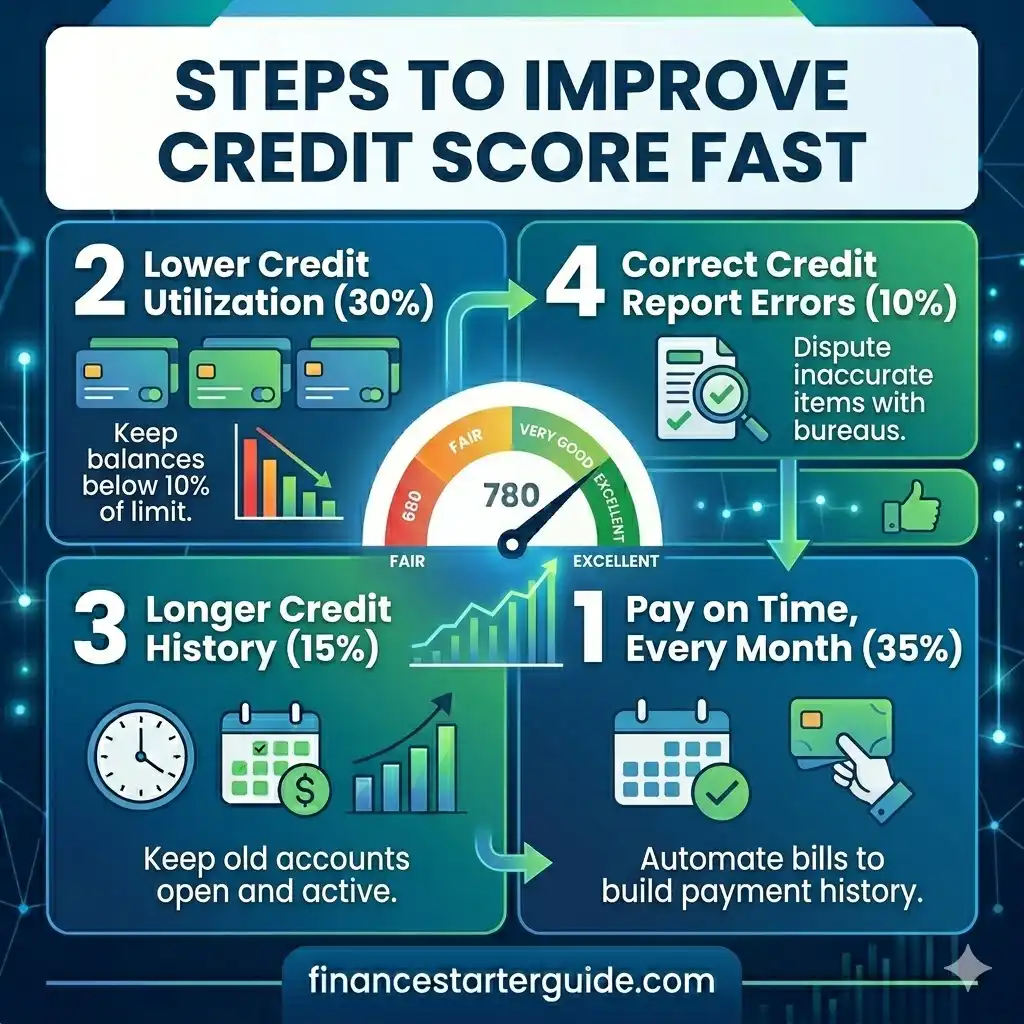
Ways to Increase Credit Score Fast 2026
"The states say the programs are needed, however they typically leave it to the local school districts to discover the cash." The problem has actually grown in an age of apparently endless monetary choice. Credit cards, which not long ago had rigorous underwriting standards, are now commonly offered. Online access to financial services and advertising e-mail has made credit offers of all sorts an ubiquitous part of life.
Ways to Increase Credit Scores in 2026The technique is understanding what to do with them and deciding which deserve utilizing. The site , for instance, has recommendations divided into three classifications: youth, teachers and teachers, and scientists. There are areas dedicated to each group with details varying from video games that help children comprehend the ideas of saving and investing to a roadmap for financial abuse of retired people.
You determine the phase of life you remain in trainee, moms and dad, house owner, crisis, and so on and you will find news and info intended at your circumstance, together with tools and calculators that can help fix issues you may be encountering. You can even submit questions to the Ask the Cash Physician and see what "the physician" recommends for debt relief.

Latest Posts

Locating No-Cost Credit Counseling Near Me in 2026

How to Find Free Financial Counseling in 2026

The Future of New Credit Repair Laws